
From October 16 to 18, 2026, the 6th International Conference on Electronic Information Engineering and Computer Science (EIECS 2026) was successfully held at the Academic Conference Center of Dongguan University of Technology (Songshan Lake Campus). The conference was sponsored by Dongguan University of Technology, organized by the School of Integrated Circuits (International School of Microelectronics), and supported by Xidian University, Dongguan Tongke Electronic Co., Ltd., and the School of Electronics and Communication Engineering of Sun Yat-sen University. ScienceNet provided media support for the event.
The conference brought together over 250 experts, scholars, and researchers from various universities and research institutions. They engaged in in-depth exchanges and discussions focusing on frontier fields such as electronic information engineering, computer science, communication systems, and intelligent systems and applications. Through keynote speeches, oral presentations (in both online and offline venues), and poster exhibitions, the conference aimed to build a high-level academic exchange platform to promote the sharing of cutting-edge technologies, the exploration of academic trends, and industry-academia-research cooperation.
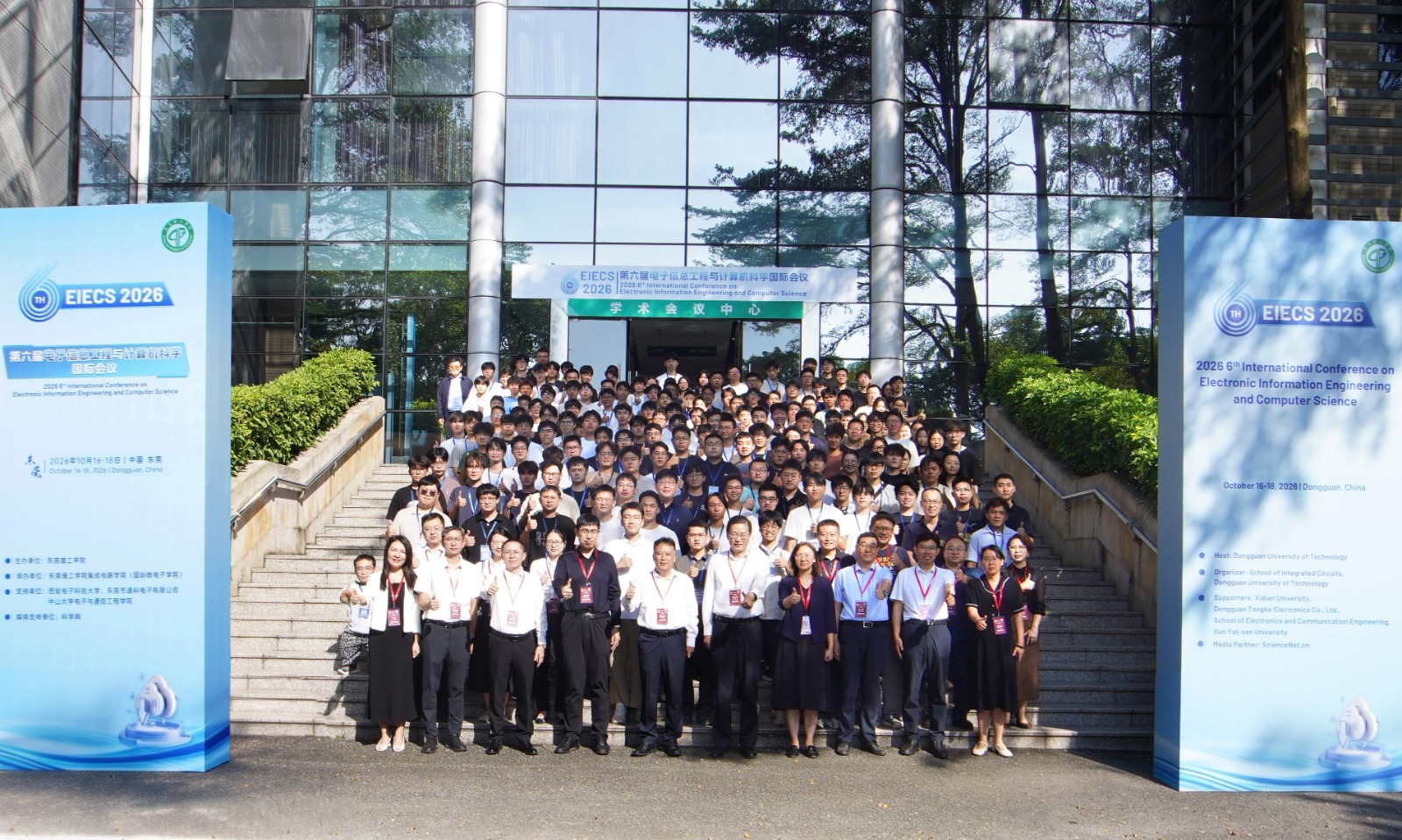
Group Photo of the Conference
The opening ceremony was chaired by Prof. Ye Cong from Dongguan University of Technology. On behalf of the organizing committee, she extended a warm welcome to all the attending experts and scholars and congratulated the convening of the conference. Subsequently, Prof. Ma Hongwei, President of Dongguan University of Technology, delivered a welcome speech on behalf of the host. He expressed sincere gratitude to colleagues from all walks of life who have long cared about and supported the university's development. He stated that electronic information engineering and computer science are important cornerstones of the digital era and key engines supporting the innovation and development of industries such as integrated circuits, artificial intelligence, and intelligent manufacturing. Dongguan University of Technology has always adhered to running a high-level applied university, relying on advantageous disciplines such as electronic science and technology and computer science and technology, and actively aligning with the industrial needs of the Guangdong-Hong Kong-Macao Greater Bay Area. He looks forward to taking this conference as an opportunity to continuously deepen exchanges and cooperation with universities and research institutes at home and abroad, and jointly promote discipline construction, talent cultivation, and scientific and technological innovation.

Welcome Address
During the conference, a total of 4 keynote speeches and 28 oral presentations (online and offline) were held, focusing on multiple frontier research directions such as integrated circuits and spintronics, RF microwaves and communication systems, artificial intelligence and computer vision, and micro-nano sensing and biomedical engineering, carrying out in-depth academic exchanges and discussions.
In the keynote speech session, Prof. Zhao Weisheng (IEEE Fellow), Vice President of Beihang University; Prof. Ma Kaixue (IEEE Fellow), Dean of the School of Microelectronics at Tianjin University; Prof. Wang Zhijun, Deputy Dean of the School of Integrated Circuits at Beijing University of Posts and Telecommunications; and Prof. Wei Ronghan from Dongguan University of Technology (recipient of the National Talent Program) delivered keynote reports respectively.
Prof. Zhao Weisheng presented a report titledSpintronics for Future Electronic Technologies, introducing the latest progress of spintronics in the field of information storage and sharing innovative achievements such as the world's first 8Mb SOT-MRAM. Prof. Ma Kaixue focused onHeterogeneous RF Integrated Suspended Line Circuits and Systems, introducing the application prospects of this technology in fields such as wireless communication and radar sensing. Prof. Wang Zhijun broughtAI-Driven High-Reliability Chip Functional Safety Design and Verification Methods, discussing an integrated technical solution that combines FPGA fault injection and graph learning risk identification. Prof. Wei Ronghan tookMagnetic MEMS for Biosensing and Biological Manipulation as his topic, demonstrating the application potential of the magnetic MEMS platform in biological detection and cell manipulation. The four wonderful reports provided attendees with academic inspiration and thinking that were both cutting-edge and enlightening, sparking heated discussions.
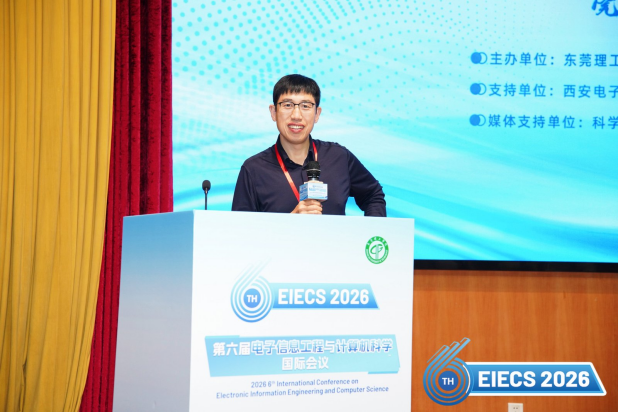
Prof. Zhao Weisheng
Speech Title: Spintronics for Future Electronic Technologies
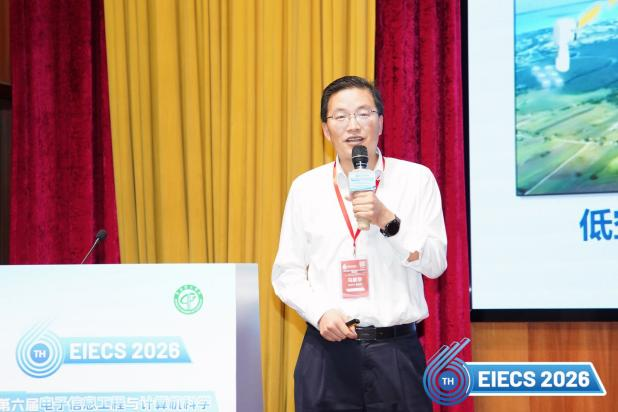
Prof. Ma Kaixue
Speech Title: Heterogeneous RF Integrated Suspended Line Circuits and Systems

Prof. Wang Zhijun
Speech Title: AI-Driven Functional Safety Design and Verification Methodology for High-Reliability Chips

Prof. Wei Ronghan
Speech Title: Magnetic MEMS for Biosensing and Biological Manipulation
The oral presentation session in the afternoon was held simultaneously in two venues: offline and online, with the offline venue chaired by Prof. Wei Ronghan from Dongguan University of Technology. Young scholars from over 20 universities and research institutes, including Dongguan University of Technology, Sichuan University, Xi'an University of Technology, Northeastern University, Qingdao University of Technology, Beijing Information Science and Technology University, Xihua University, National University of Defense Technology, Sun Yat-sen University, and Tsinghua Shenzhen International Graduate School, shared their latest research results. The report topics covered mid-infrared heterostructures and on-chip polarization devices, electromagnetic energy harvesting power management, perovskite quantum dots, medical image classification, FPGA signal detection, EEG decoding, autonomous USV path planning, electromagnetic measurement-while-drilling signal denoising, image recognition AI agents, and many other frontier directions, fully demonstrating the innovative vitality and research depth of young scientific researchers. The conference also set up an academic poster exhibition session, with a total of 107 academic posters participating in the display, building a diversified academic exchange platform for participants.
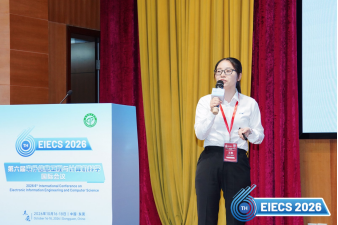
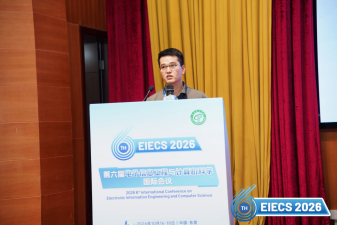


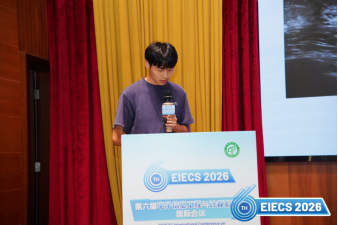

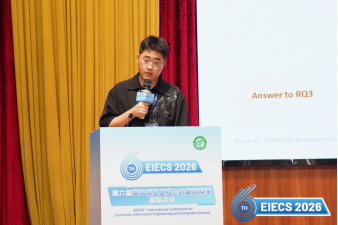


On-Site Oral Presentation
Through multi-level and multi-form academic exchanges, this conference concentrated on presenting the latest research achievements in electronic information engineering, computer science, and related fields. An award ceremony was held at the closing ceremony to present the Best Poster Award, Best Young Scholar Presentation Award, and Best Paper Award to outstanding researchers, in order to commend excellent academic achievements and wonderful academic presentations, encourage scientific researchers to continue to carry out high-level research, and stimulate the academic enthusiasm and innovative vitality of young scholars.

Closing Remarks
Subsequently, Prof. Zeng Pengju, Party Secretary of the School of Integrated Circuits (International School of Microelectronics) at Dongguan University of Technology, delivered the closing speech. He expressed warm congratulations on the successful holding of the conference, expressed sincere thanks to all participating experts, scholars, and speakers, and looked forward to continuing to work hand in hand with colleagues from all walks of life in the future to jointly promote academic prosperity and industrial development in related fields.
With the smooth completion of all agenda items, EIECS 2026 concluded successfully. This conference fully demonstrated the latest research results and cutting-edge technologies in the fields of electronic information engineering and computer science, and promoted the exchange and collision of academic ideas. Looking to the future, we look forward to more outstanding scholars and young talents gathering here, working together to continuously break through technical bottlenecks and help scientific and technological progress and industrial upgrading.

On-Site Photos of the Conference